


Favorites
Customize ESPN
Relief as Norris finally exorcizes his 'Lando NoWins' nickname
Since 2021, Lando Norris has been plagued by his 'Lando NoWins' nickname. Sunday, however, halted his 109-race run of winless races.
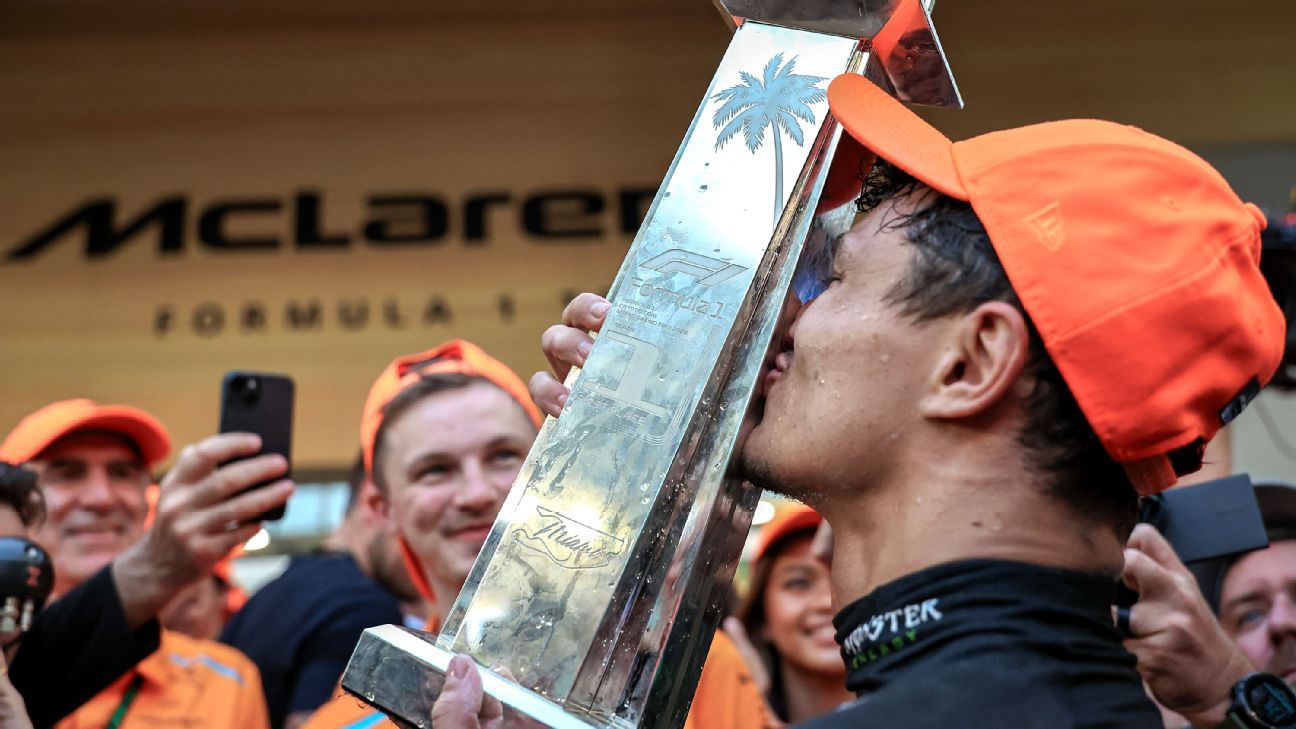
Song Haiyuan/MB Media/Getty Images
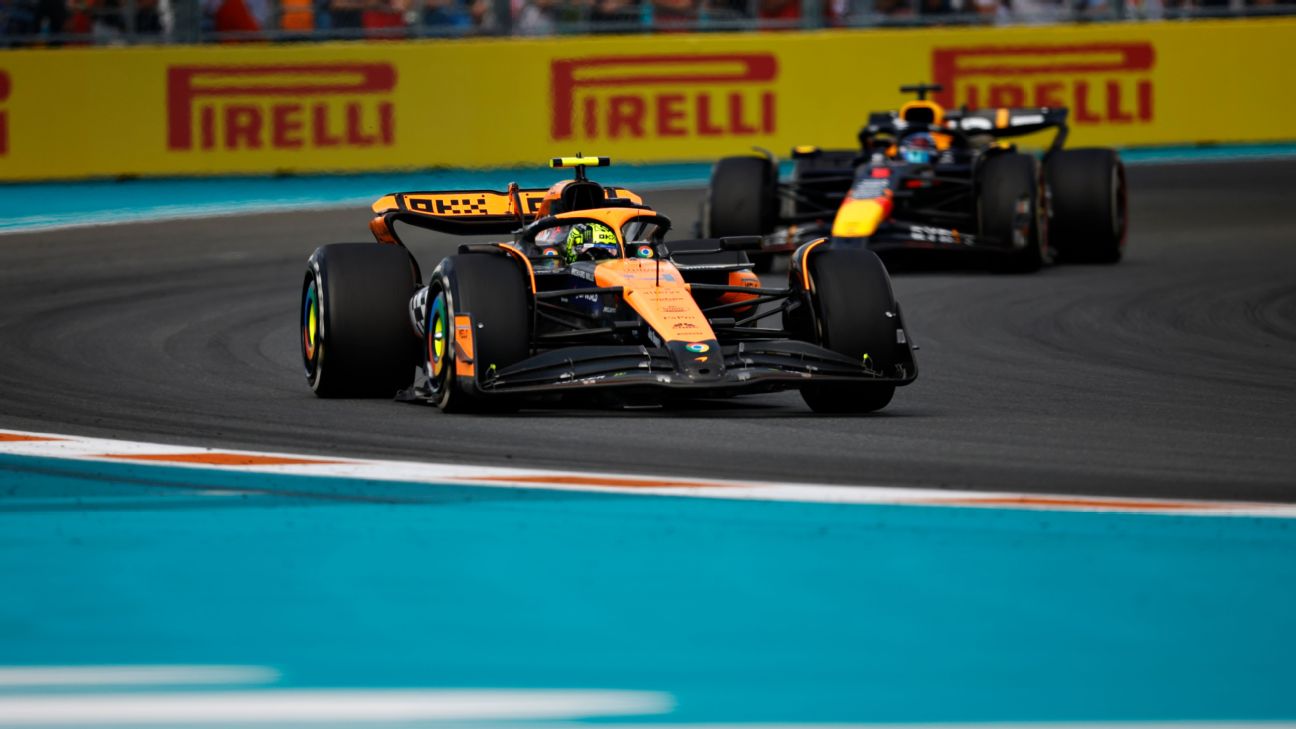
Are Lando Norris and McLaren a threat to Red Bull now?
Fans who were growing bored of seeing Verstappen dominate can take comfort in the fact McLaren seems to be making big steps forward after Norris' win.
TOP HEADLINES

F1'S DESIGN ICON
Who is F1 design icon Adrian Newey?
Adrian Newey has dominated headlines in Formula One in recent days, but why is Red Bull's chief technical officer so sought after by other teams?

Kym Illman/Getty Images
MIAMI GRAND PRIX
SPRINT RACE: 11:55 A.M. ET ON ESPN
Lando Norris outlasts Max Verstappen, wins Miami Grand Prix

0:58
Verstappen, Perez nearly collide on opening turn of Miami Grand Prix

0:32
DANIEL RICCIARDO
Daniel Ricciardo opens up on criticism in fickle world of F1
Red Bull's Daniel Ricciardo talks to ESPN about the pressures of Formula 1, the struggles he's faced this year and what comes next.
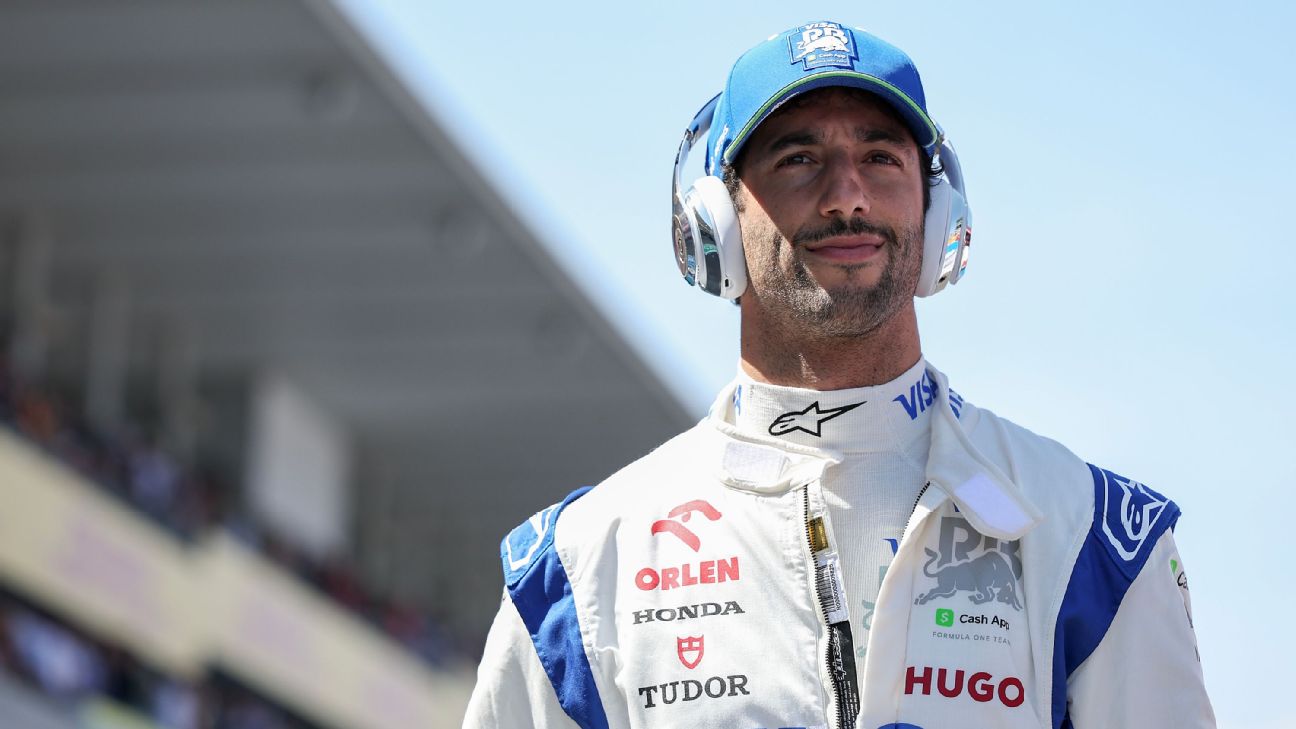
(Photo by Qian Jun/MB Media/Getty Images)
UNLAPPED PODCAST
Adrian Newey's departure, Ferrari's new livery and more
Welcome to Unlapped from Miami! Katie George, Nate Saunders, Laurence Edmondson, and Spencer Hall are here to break down the latest headlines from Formula One
ESPN
Will Lewis Hamilton attract Adrian Newey to Ferrari?

1:45
CHINESE GRAND PRIX
MORE MAX MASTERY
After Verstappen's Chinese GP victory, who can challenge his F1 dominance?
Red Bull's Max Verstappen is continuously upping his game, and his performance at the Chinese Grand Prix shows he's not slowing down.
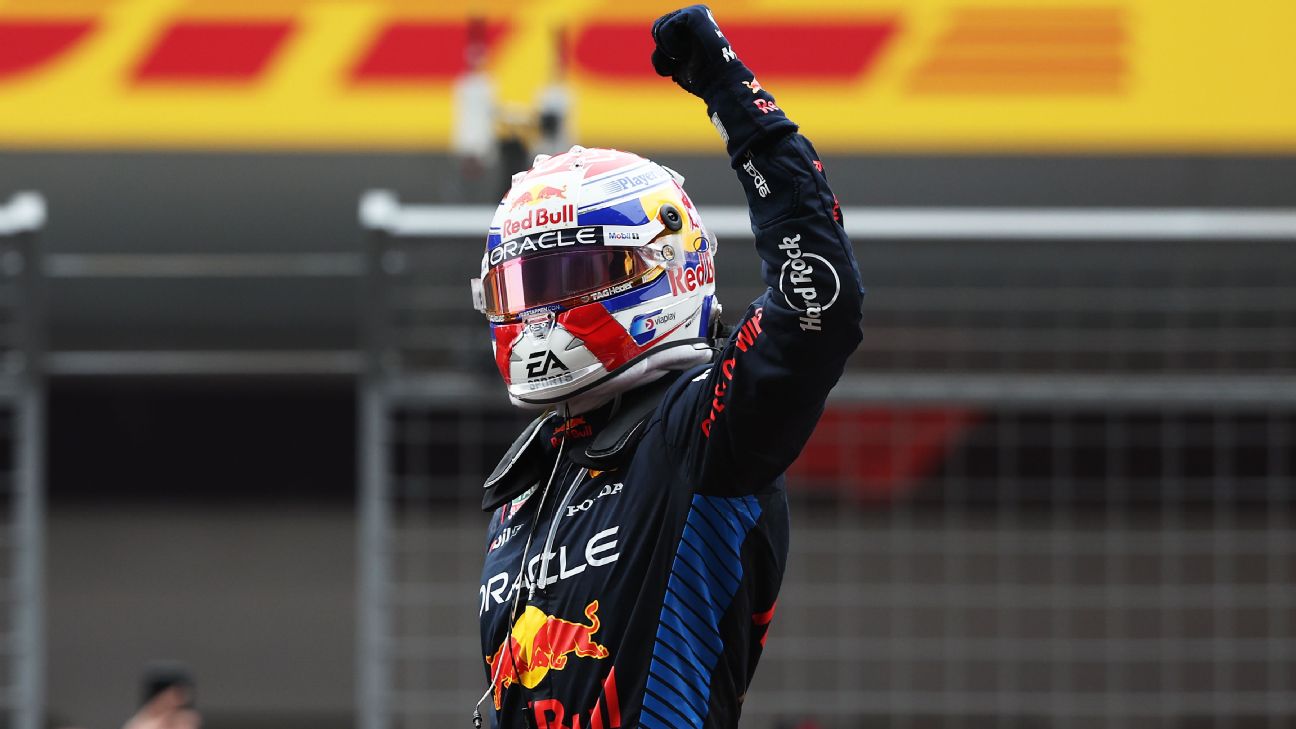
(Photo by Lintao Zhang/Getty Images )
STATE OF PLAY
State of play in F1 as Red Bull, Max Verstappen untouchable while Lewis Hamilton, Mercedes struggle
With the Formula 1 season approaching its quarter-way point, we've taken a look at the state of play for each of the grid's 10 teams.
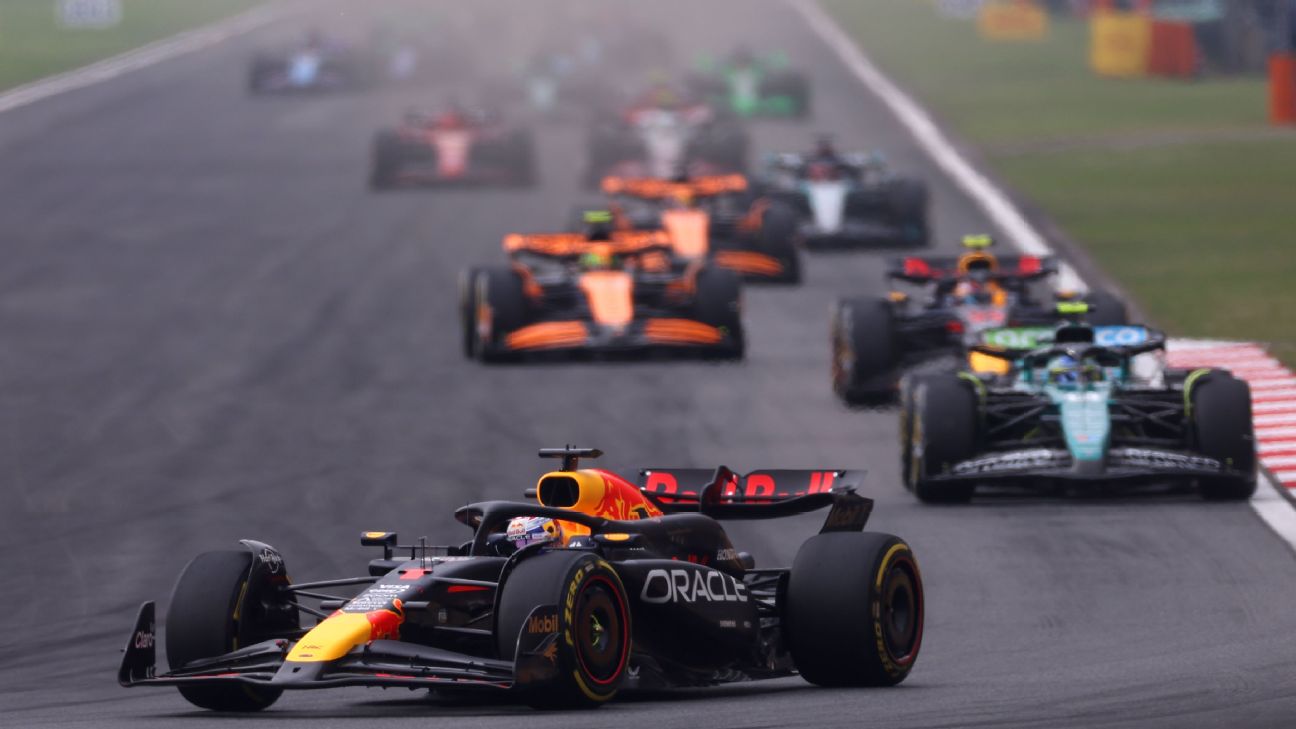
(Photo by Lars Baron/Getty Images)
Top Headlines
- Norris: F1 win was a matter of 'when' not 'if'
- Stella: FIA must review 'unacceptable' tactics
- Alonso accuses stewards of bias after sprint race
- Ricciardo: Sprint result served to silence critics
- Newey on departure: I want to take a break
- McLaren boss: Newey Red Bull exit the 1st domino
- Hamilton: I'd love to work with Newey in future
- Williams denies rumours of replacing Sargeant
- Alonso: Career dream to work with Newey